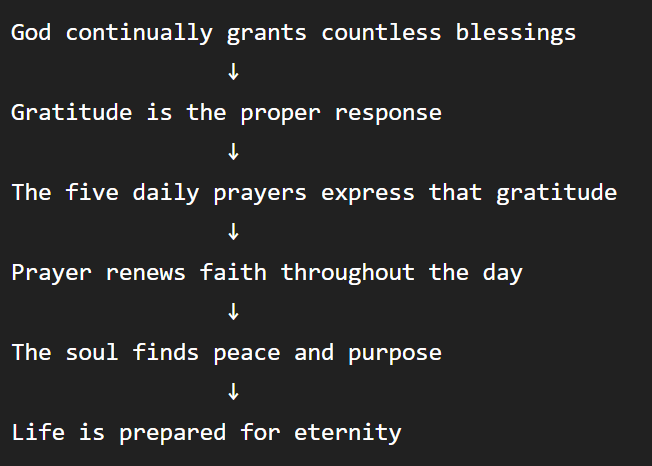
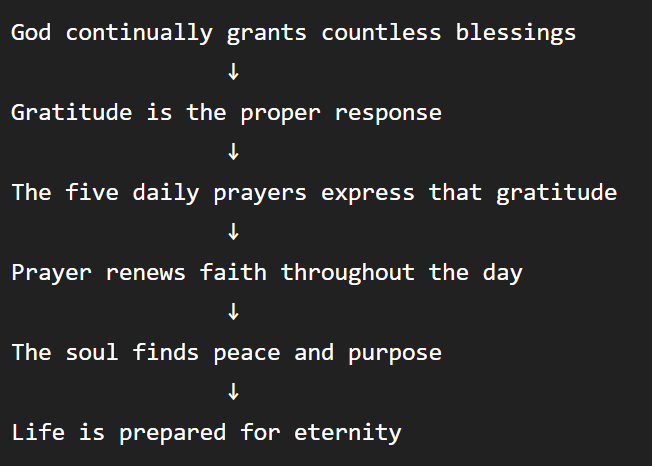
The Fourth Word of The Words by Imam Said Nursi explains why the five daily prayers (salat) are both reasonable and spiritually essential.
Rather than treating prayer as a difficult obligation, Imam Nursi presents it as a natural expression of gratitude and a source of peace. Imam Nursi asks:
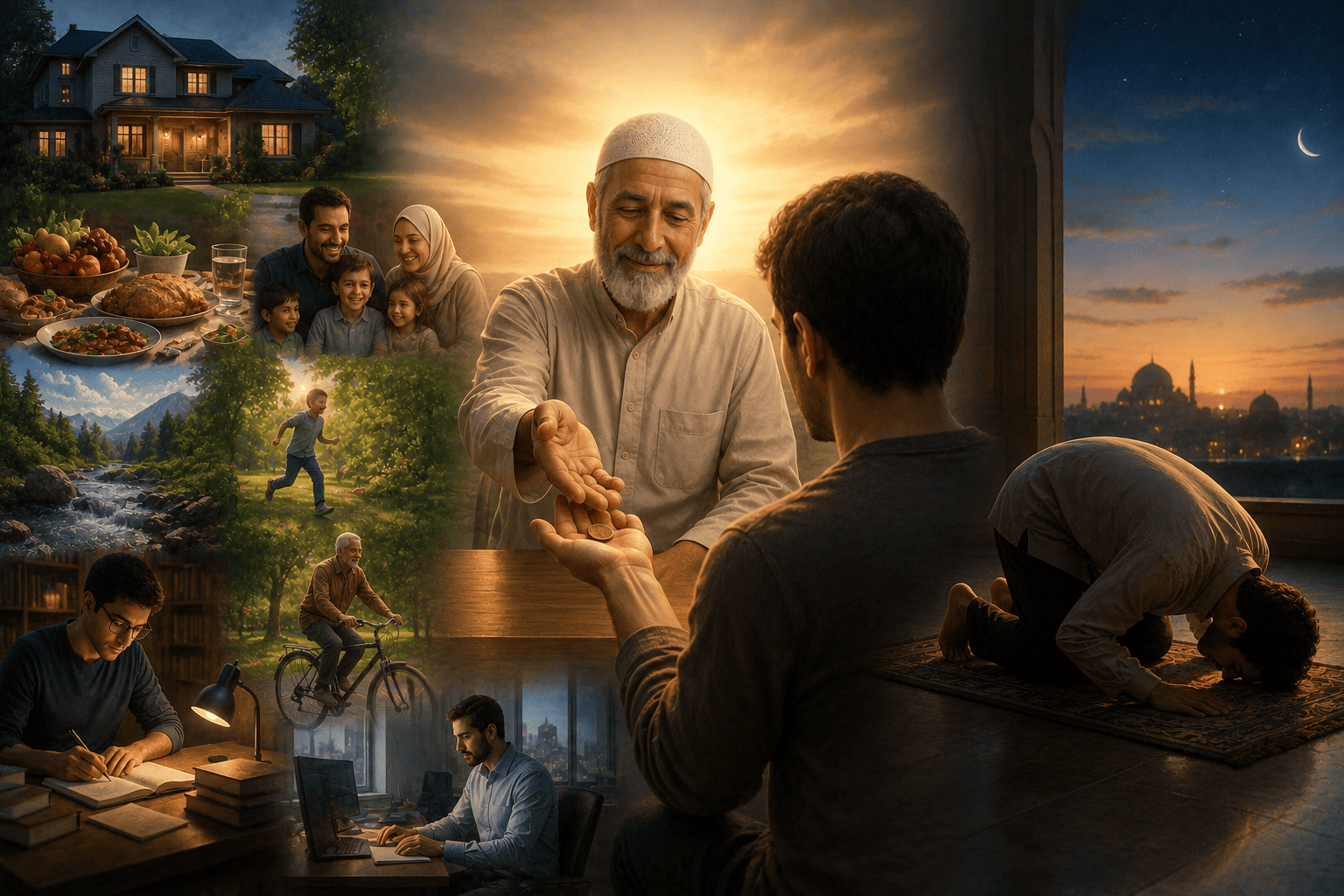
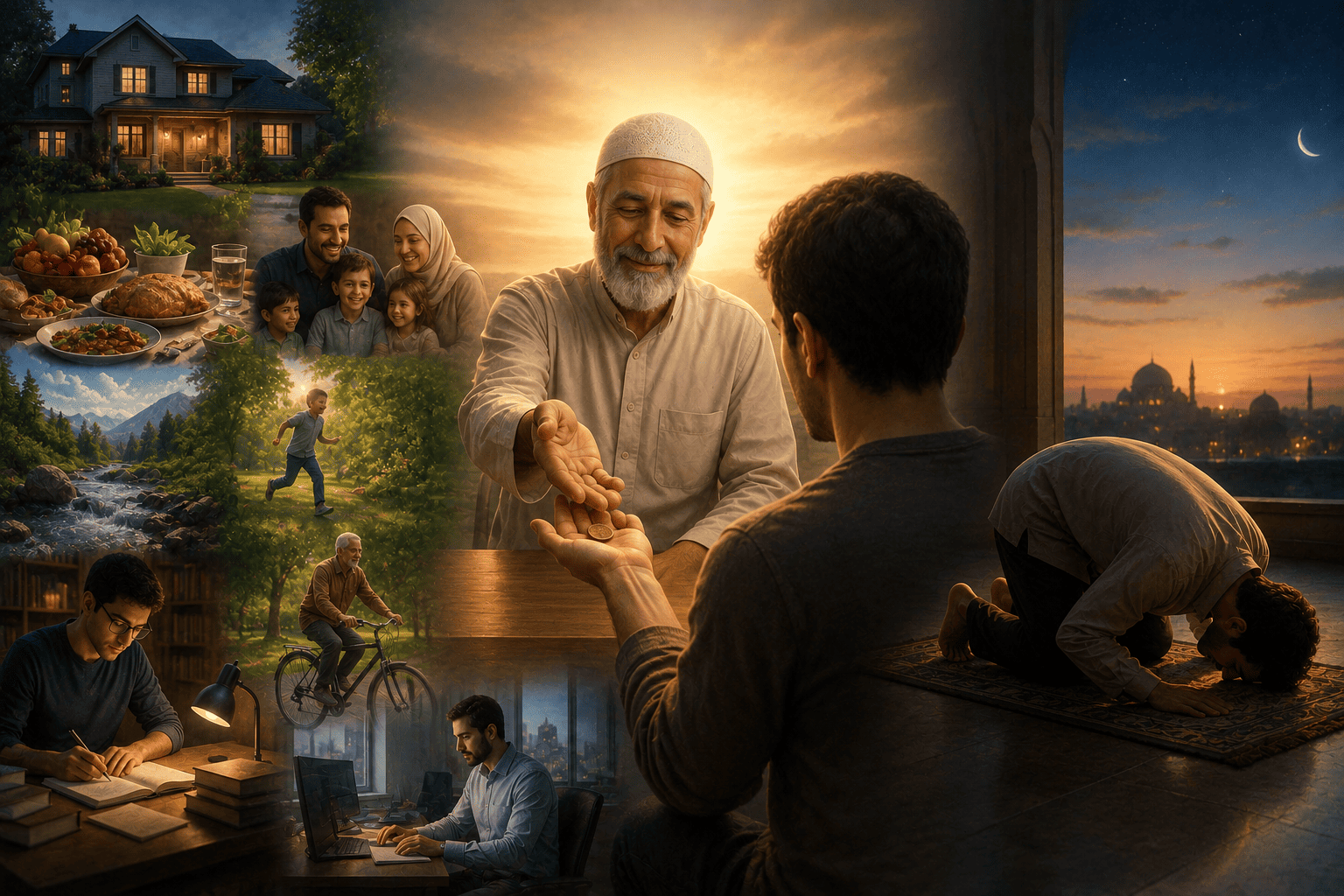
If God has given us countless blessings, is it too much to devote a few minutes each day to thanking Him ?
Central Analogy: A Small Payment for Great Blessings
Imam Nursi compares the five daily prayers to a servant working for a generous employer.
Imagine someone who:
- receives food,
- clothing,
- shelter,
- protection,
- and wages every day.
Would it be unreasonable for the employer to ask the servant to spend a few minutes expressing thanks and fulfilling a simple duty ?
Of course not.
Likewise, God continually grants us:
- life,
- health,
- sight,
- hearing,
- inteliigence,
- family,
- sustenance,
- and countless other blessings.
The five daily prayers are a small act of gratitude in return.
Prayer Is Not a Burden
Imam Nursi emphasizes that the prayers occupy only a very small portion of the day.
Although there are five prayer times, the total time devoted to them is relatively brief compared with the other hours spent working, resting, eating, or pursuing worldly activities.
Imam Nursi's point is:
The spiritual benefits far outweigh the small investment of time.
The Five Prayer Times Reflect the Rhythm of Life
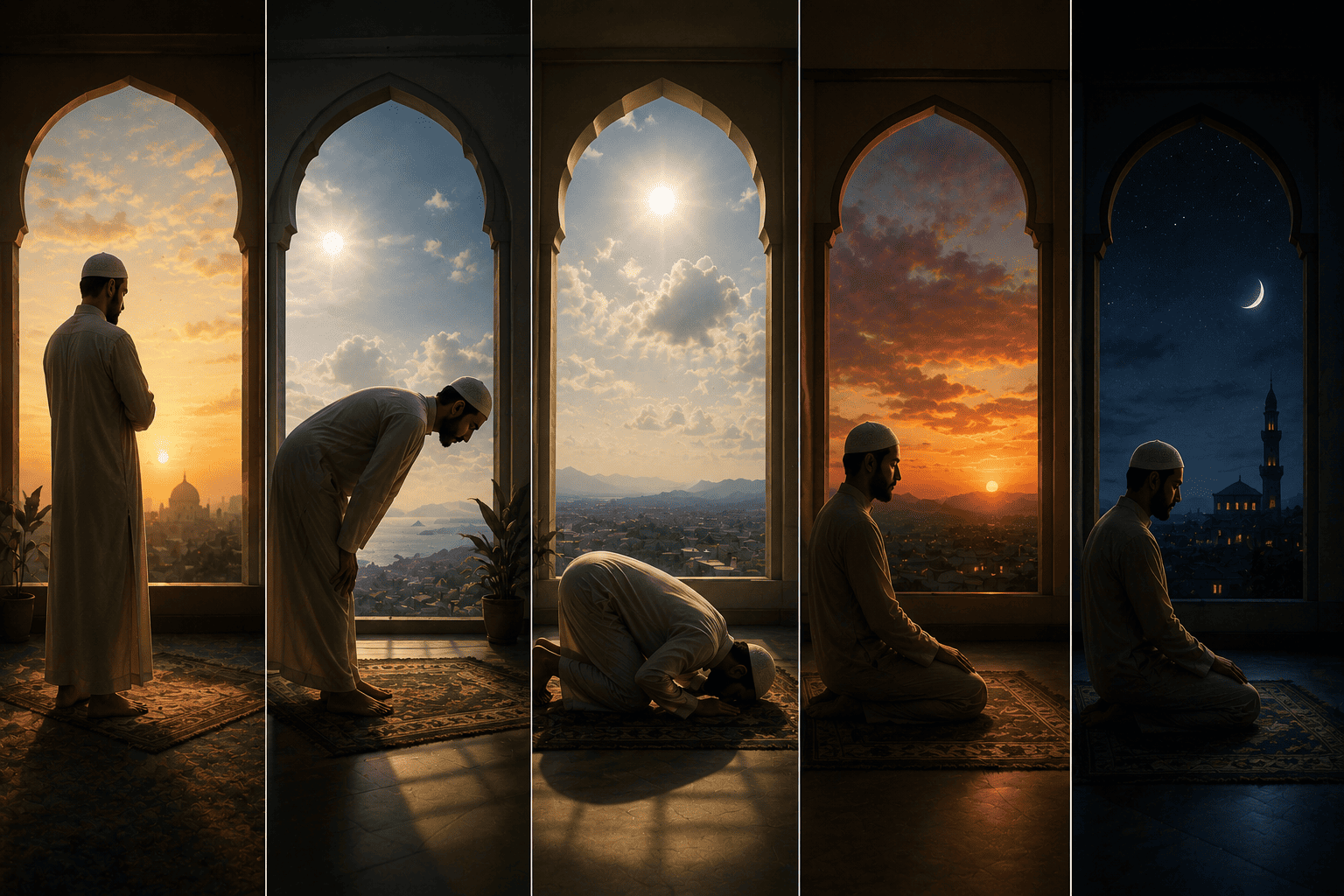
One of the most beautiful parts of the Fourth Word is Imam Nursi's explanation of why prayer is spread throughout the day.
Each prayer corresponds to both a time of day and a stage of human life.
Fajr (Dawn)
Represents
- birth,
- new beginnings,
- hope,
- the awakening of creation.
It reminds us that every new day is a fresh gift from God.
Dhuhr (Midday)
Represents
- youth,
- strength,
- productivity,
- the fullness of life.
It is a pause to remember the One who grants our abilities.
Asr (Late Afternoon)
Represents
- maturity,
- the passing of time,
- the realization that worldly life is temporary.
It encourages reflection before the day declines.
Maghrib (Sunset)
Represents
- old age,
- the end of worldly life,
- the fading of earthly beauty.
As daylight disappears, we remember that this world is not permanent.
Isha (Night)
Represents
- death,
- rest,
- the unseen world,
- trust in God.
Just as sleep ends one day and leads to another, death prepares the believer for eternal life.
Prayer Renews Faith
Life is full of distractions.
Without regular remembrance:
- gratitude fades,
- worries increase,
- people become absorbed in worldly concerns.
Prayer acts as a recurring reminder that:
- God is present,
- life has purpose,
- every blessing comes from Him.
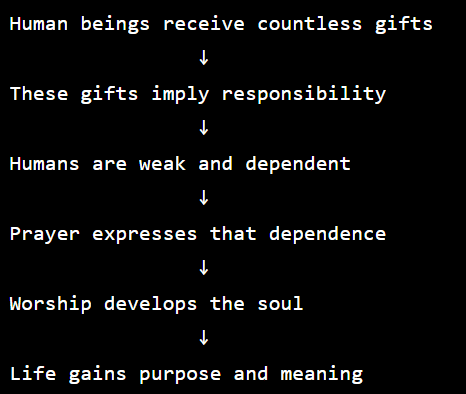
Worship Benefits the Worshipper
As in the Third Word, Imam Nursi repeats an important principle:
God does not need human worship, prayer benefits the one who prays.
Prayer:
- strengthens faith,
- disciplines the soul,
- brings inner peace,
- cultivates gratitude,
- helps resist selfish desires.
Life Is Temporary
Another recurring theme is that worldly life is brief.
The passing of each day mirrors the passing of our lives.
The five prayers help us remain conscious of:
- mortality,
- accountability,
- eternity.
Instead of fearing time, believers are invited to use it wisely.
Summary
The Fourth Word teaches that:
The five daily prayers are a small act of gratitude that aligns human life with the natural rhythm of creation, continually renewing faith and reminding us of our dependence on God.