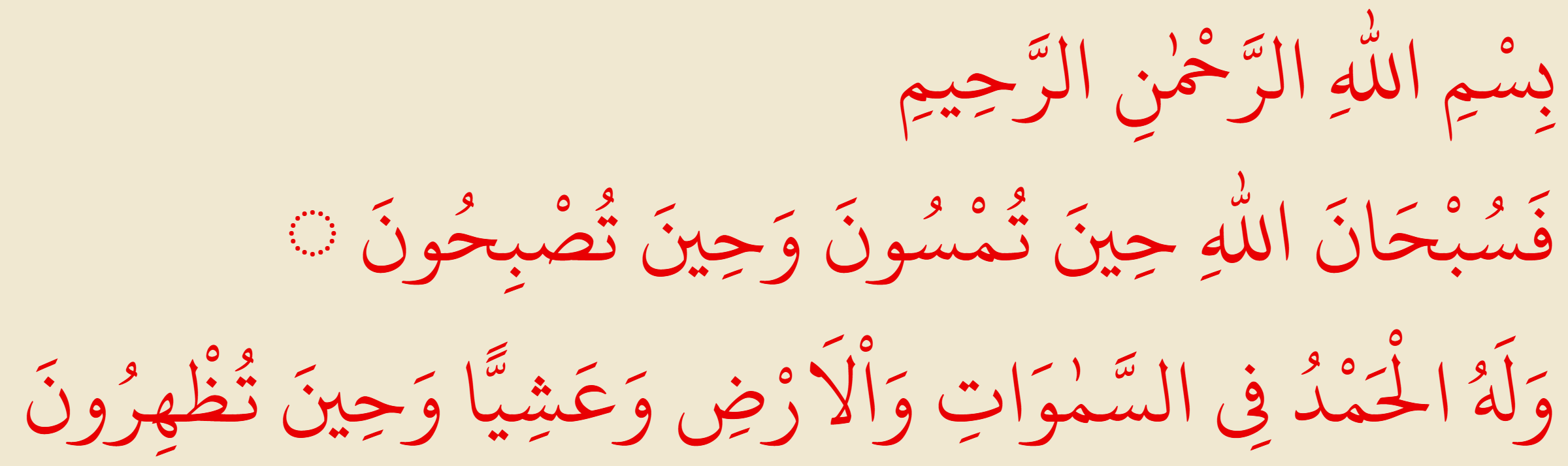
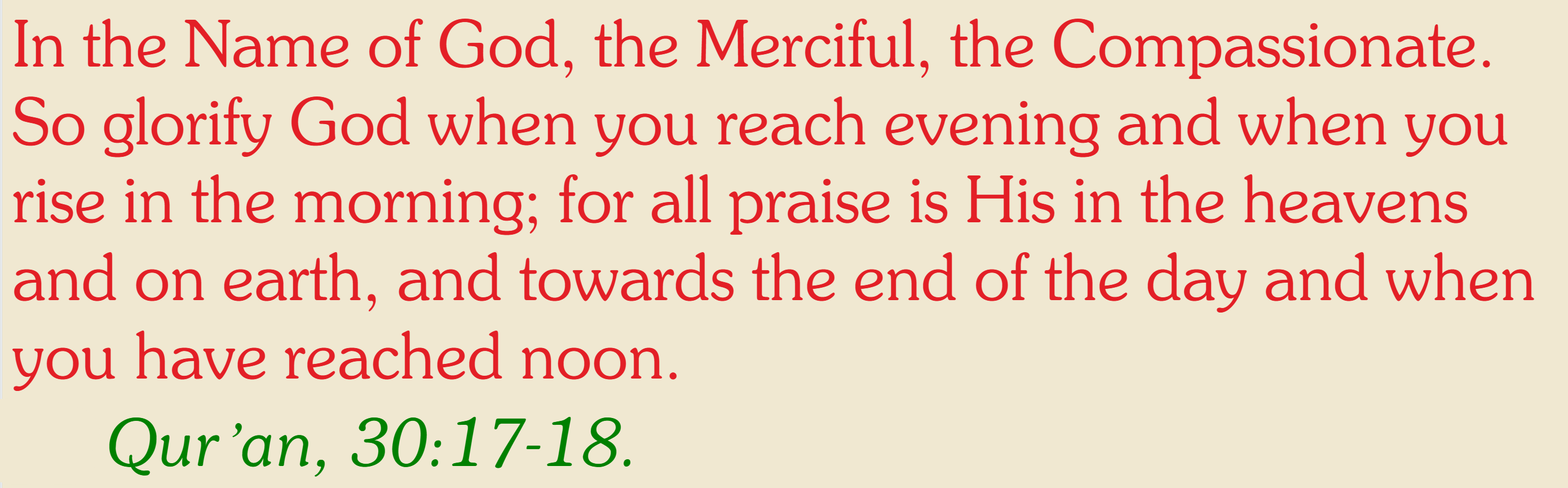
The Ninth Word of The Words by Imam Said Nursi explains why the five daily prayers (Salah/Namaz) are prescribed at specific times of the day.
Its central message is that the five prayer times are not arbitrary. Each one corresponds to an important transformation in the universe and reminds us of God's power, mercy and countless blessings.
Imam Nursi explains this through five main points.
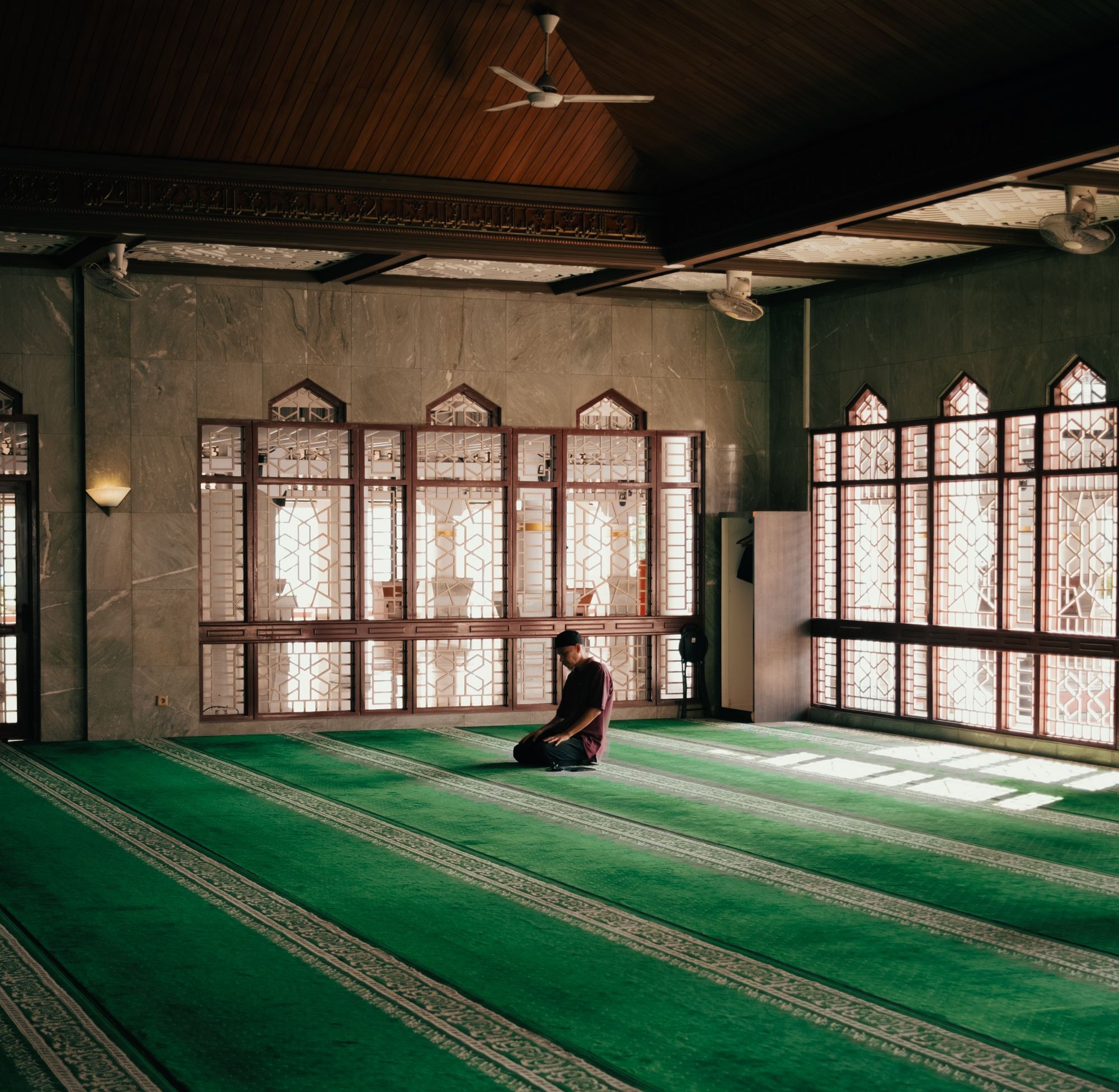
1. The purpose of prayer: Glorification, Greatness and Gratitude
Prayer brings together three fundamental forms of worship:
- Subhanallah: Recognizing God's perfection and declaring Him free from all deficiencies.
- Allahu Akba: Recognizing God's greatness and infinite power.
- Alhamdulillah: Expressing gratitude for His countless blessings.
These three meanings are present throughout the words and movements of Salah.
This is also why these phrases are repeated 33 times each after prayer: to reinforce the meaning of worship.
2. The meaning of worship: Recognizing our weakness and God's greatness
Imam Nursi explains that worship is an expression of our relationship with God.
We recognize three fundamental realities:
- Our weakness: We cannot control everything that happens to us.
- Our poverty: We are constantly dependent on God's provisions and mercy.
- Our imperfections: We make mistakes and need forgiveness.
Through prayer, we turn towards God's perfection, power and mercy.
The movements of Salah express these meanings:
- Standing (Qiyam): Respect and devotion.
- Bowing (Ruku): Humility before God's greatness.
- Prostration (Sujud): Complete submission, love and recognition of our dependence on Him.
Prayer is therefore not something God needs from us; it is an expression of what we need from Him.
3. Prayer is a summary of the universe
Imam Nursi makes an interesting comparison:
- Every human being is like a miniature of the universe.
- Surah Al-Fatiha is like a miniature of the Qur'an.
- Prayer is like a summary of all forms of worship performed throughout creation.
Everything in the universe glorifies and obeys God in its own way. Human prayer brings together these different meanings through conscious worship.
In this sense, when a person prays, they participate in the universal worship of creation.
4. The five prayer times reflect the great transformations of existence
Imam Nursi compares the daily cycle of prayer to a clock. Just as seconds, minutes, hours and days are connected, the different stages of a day reflect larger transformations in nature, human life and the universe.
The movements of Salah express these meanings:
- Fajr (Dawn): Represents spring, birth and the beginning of life. It reminds us of God's creative power and the resurrection that follows the darkness of death
- Dhuhr (Noon): Represents summer, youth and the fullness of life. It reminds us of God's generosity and the abundance of His blessings.
- Asr (Afternoon) Represents autumn, old age and the passing of time. It reminds us that our lives are temporary and that we should be grateful for the blessings we have received.
- Maghrib (Sunset): Represents death, the decline of living things and the end of the world. It reminds us that everything temporary eventually disappears and that we need an Eternal Creator.
- Isha (Night): Represents darkness, winter, the grave and the Intermediate World (Barzakh). It reminds us of our need for God's mercy and the eternal life awaiting us.
The following morning represents resurrection: just as morning follows night and spring follows winter, the Resurrection follows the intermediate life.
5. Prayer is essential for the human spirit
The final point explains why human beings need prayer.
We are:
- Weak, yet surrounded by difficulties.
- Powerless, yet exposed to dangers.
- Poor, yet have countless needs.
- Impatient, yet burdened with responsibilities.
- Attached to loved ones, yet constantly experiencing separation and loss.
- Created with a desire for eternity, yet given only a limited earthly lifetime.
Imam Nursi explains how each prayer provides spiritual support throughout these difficulties.
| Prayer | Spiritual significance | ||
|---|---|---|---|
| Fajr | Asking God for strength and guidance before beginning the day's challenges. | ||
| Dhuhr | Taking a break from worldly distractions and expressing gratitude. | ||
| Asr | Reflecting on the passing of time and thanking God for the day's blessings. | ||
| Maghrib | Turning towards the Eternal Creator when remembering death and separation. | ||
| Isha | Ending the day by seeking God's protection, mercy and guidance. |
Prayer reconnects us with the Eternal One rather than allowing us to become completely absorbed in temporary worldly things.
Summary
The Ninth Word teaches that: The five daily prayers are spiritual connections with God that remind us of the great transformations of existence, express our gratitude for His blessings and provide the strength our souls need throughout life's journey.